


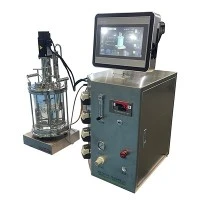
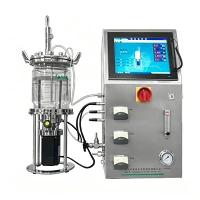
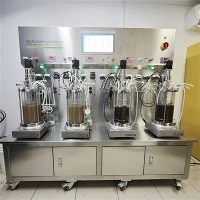
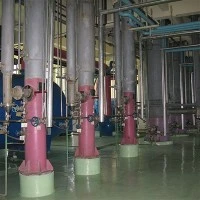
As biotechnology, fermentation engineering, and biomanufacturing continue to evolve, laboratory bioreactors are playing an increasingly important role in scientific research and process development. A laboratory bioreactor is a specialized system designed to provide a controlled environment for cultivating microorganisms, cells, or other biological materials. It serves as an important bridge between fundamental research and the development of scalable production processes.
In simple terms, a laboratory bioreactor is a controlled vessel used to carry out biological cultivation, fermentation, or bioconversion under defined operating conditions. A typical system consists of a vessel, agitation mechanism, temperature control unit, gas delivery system, sensors, and an automated control platform. Depending on the application, additional functions such as pH regulation, dissolved oxygen control, nutrient feeding, and foam management can be integrated into the system.
The primary purpose of a laboratory bioreactor is to create and maintain an environment in which microorganisms or cells can grow and metabolize under controlled conditions. During an experiment, sensors continuously monitor critical parameters such as temperature, pH, dissolved oxygen, agitation speed, and gas flow. When operating conditions change, the control system can respond by adjusting heating or cooling, agitation, aeration, or nutrient feeding. This helps maintain stable process conditions and improves experimental consistency and reproducibility.
Compared with conventional shake-flask cultivation, laboratory bioreactors offer more precise process control and more comprehensive data collection. They also provide experimental conditions that more closely resemble those encountered in larger-scale production. Researchers can use these systems to compare different cultivation strategies, study microbial or cellular growth behavior, optimize culture media and operating parameters, and generate valuable data for subsequent process scale-up.
Laboratory bioreactors are used across a broad range of applications, including microbial fermentation, mammalian cell culture, plant cell culture, food fermentation, and other bioprocessing studies. They are particularly valuable in pharmaceutical research, food biotechnology, agricultural biotechnology, and modern biomanufacturing, where controlled cultivation is essential for developing reliable and scalable processes.
With continued advances in automation, online sensing, and digital process management, laboratory bioreactors are becoming more precise, flexible, and intelligent. Beyond serving as cultivation equipment, they are increasingly becoming comprehensive research platforms that support process optimization, technology development, and the transition from laboratory discoveries to industrial production.