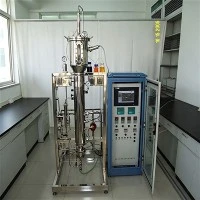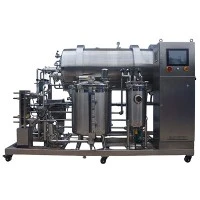

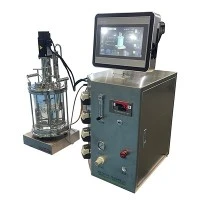


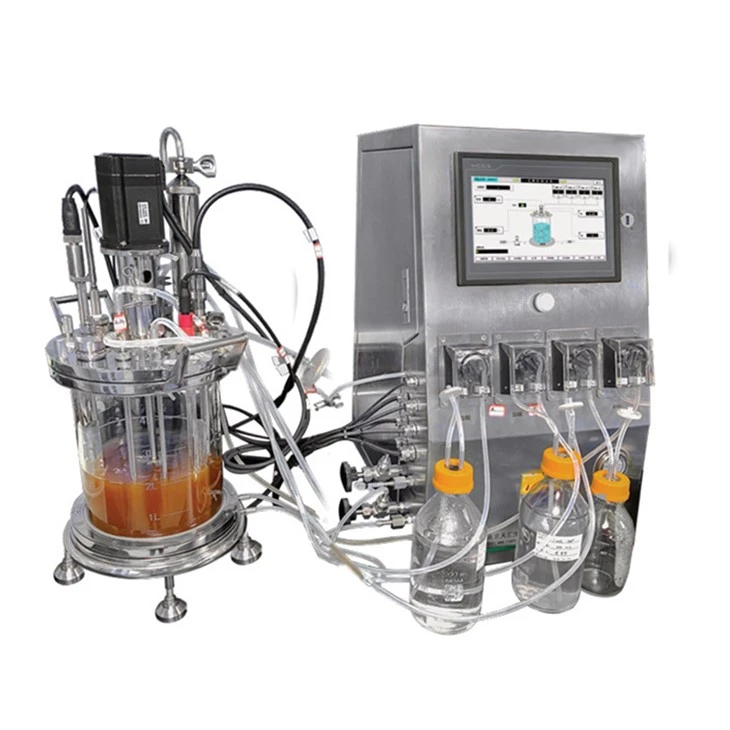
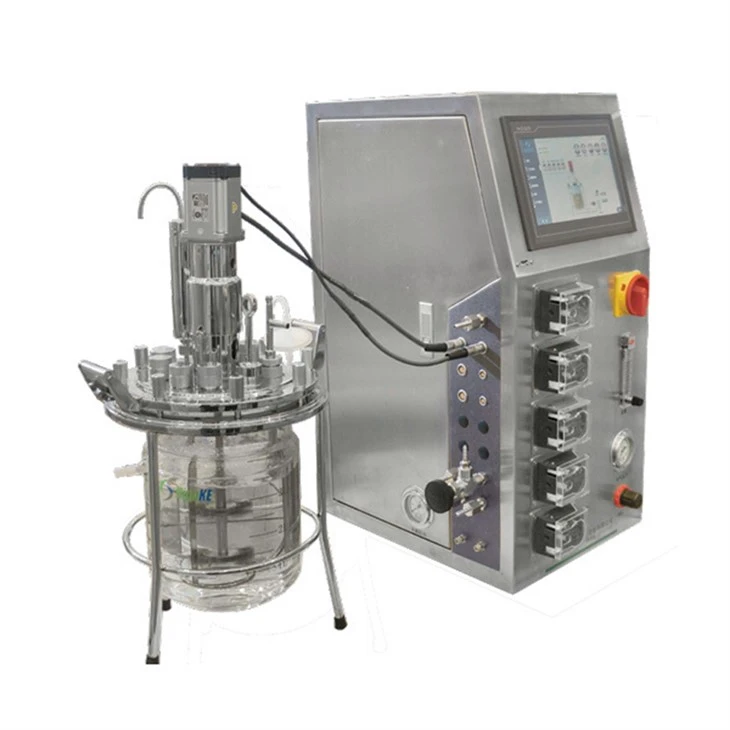
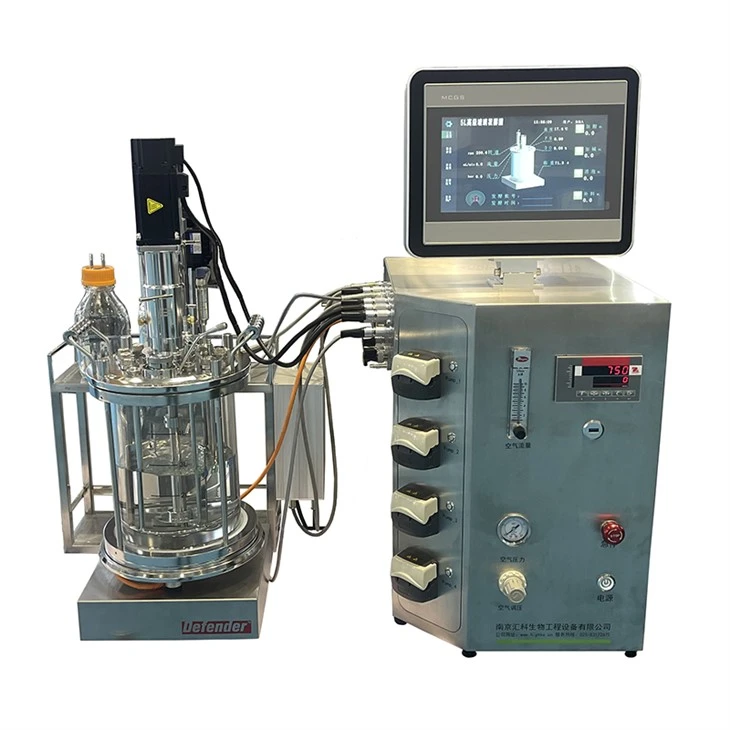
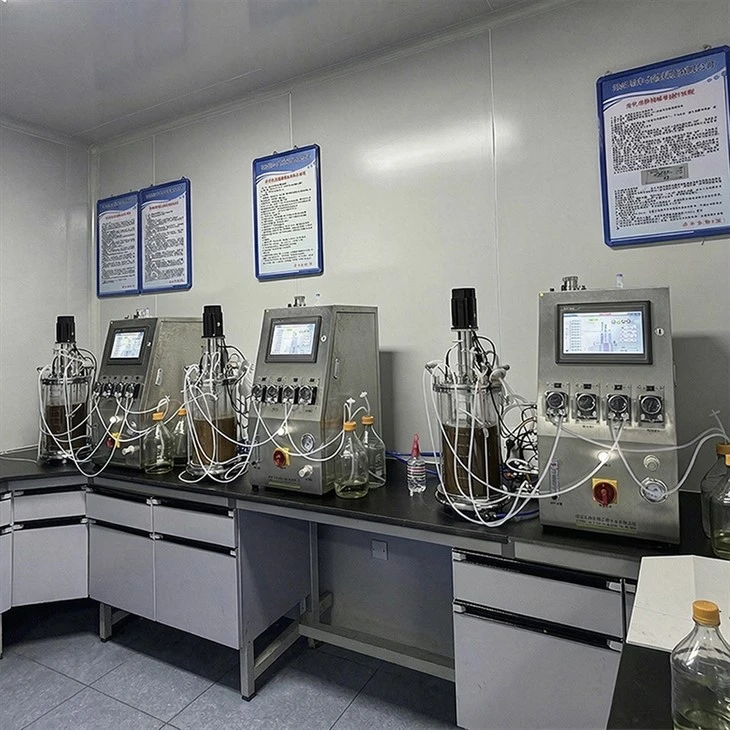
The Mechanically Stirred Glass Fermenter is a mainstream laboratory fermentation device combining a high-borosilicate glass vessel with top-driven or magnetically coupled mechanical agitation. The transparent glass body allows direct observation of the fermentation broth, while the 316L stainless steel top cover and ports ensure durability and sterility. This fermenter is widely used in research institutes and industrial microbiology laboratories for media formulation screening, fermentation process parameter optimization, and strain verification.
Core Structure and Agitation System
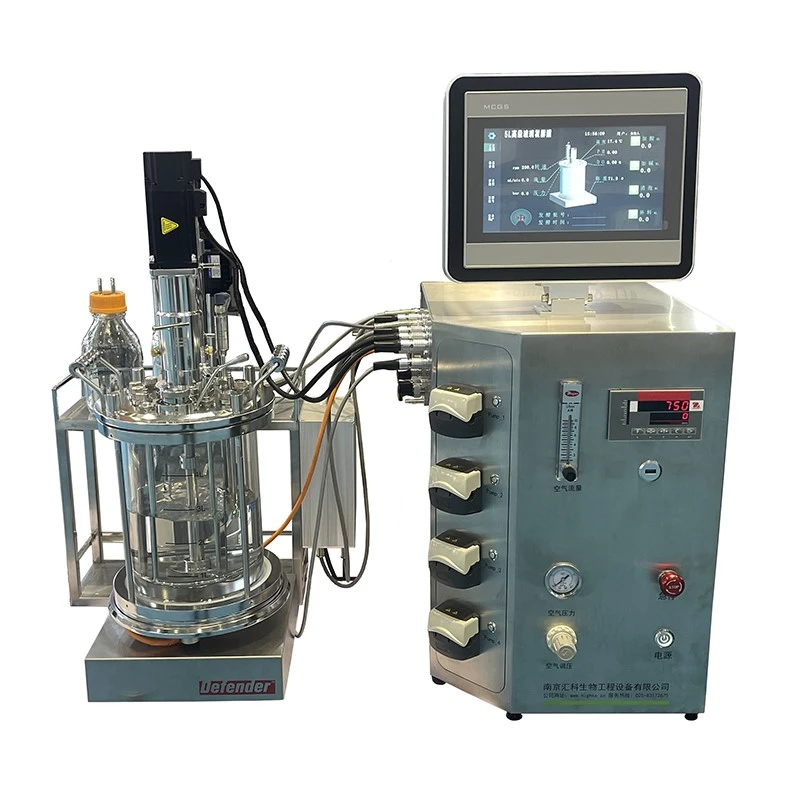
The vessel is constructed from temperature-resistant high-borosilicate glass with 316L stainless steel headplate and ports. A jacketed or internal coil temperature control system maintains precise thermal conditions. The agitation system features either top-mounted mechanical agitation with servo/stepper motor and mechanical seal, or magnetic coupling for seal-free, low-leakage operation. Dual impellers are standard – typically a six-flat-blade turbine with a lower pitched/blade or curved blade, combined with wall baffles to break liquid vortices and enhance mixing. A foam breaker is mounted on the shaft to control foam buildup. Speed is infinitely adjustable from 50 to 1000 rpm.
Aeration and Sterile System
Sterile air is introduced through a bottom ring or microporous gas sparger. Dual 0.22 μm sterile filters are installed on both inlet and outlet lines. Airflow is controlled by rotameter or mass flow controller. The system includes online pH, dissolved oxygen (DO), and temperature monitoring and control, with ports for acid/alkali addition, feeding, inoculation, and sampling. PLC with touchscreen provides automatic process control.

Working Principle
Sterile air is introduced through the bottom sparger. The high-speed rotating impeller shears the incoming gas into fine bubbles, maximizing gas-liquid contact area. The jacket or internal coil maintains the set temperature. The control system continuously adjusts agitation speed, aeration rate, pH, and feed rate based on real-time sensor feedback to maintain optimal conditions for microbial growth and product formation.
Typical Applications
This fermenter is ideal for strain screening, fermentation process optimization, and media formulation studies. It is also widely used in teaching and R&D for microbial metabolism research and synthetic biology strain validation. The transparent glass body provides clear visualization of broth conditions throughout the fermentation process.
Manufacturing Expertise and Support
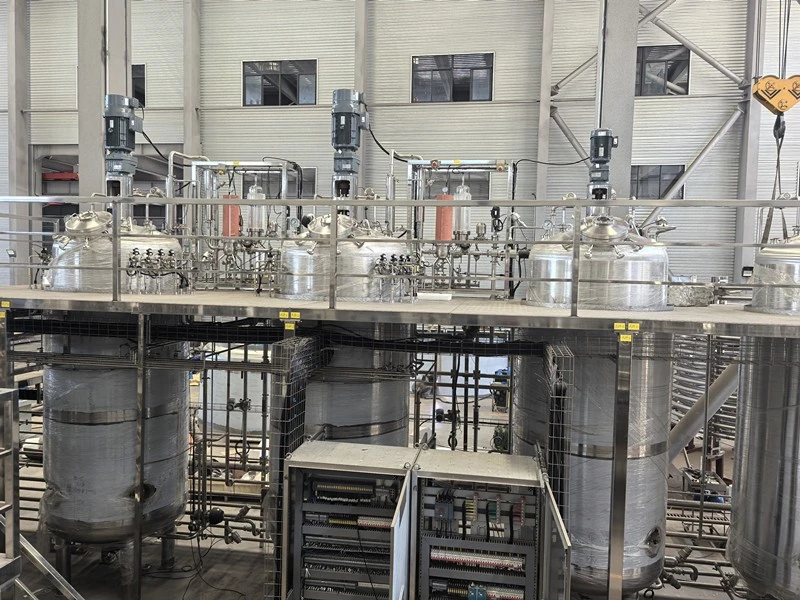
NanJing TianHong Bioengineering Equipment Co., Ltd. was founded by research leaders from the National Engineering Research Center for Biotechnology and Nanjing Tech University, with over 30 years of practical experience in equipment development, engineering design, and industrial production. The company holds ISO9001 certification, special equipment production licenses, and more than 30 patents related to fermenters and bioreactors. With over 3,000 sets of bioreactors supplied and more than 500 fermentation projects completed over 20 years, the company offers comprehensive support from laboratory-scale to industrial-scale bioprocess solutions.
Product Specifications
|
Parameter |
Description |
|
Model |
MGF-3 / MGF-5 / MGXF-3 / MGXF-5 / NGF-5 / NGF-7 |
|
Nominal Volume |
3L, 5L, 7L (customizable up to 10L) |
|
Vessel Material |
316L stainless steel + high-borosilicate glass |
|
Drive Method |
Top servo motor mechanical agitation |
|
Speed Control |
50–1000 rpm, accuracy ±5 rpm |
|
Temperature Control |
Up to 50°C, accuracy ±0.5°C |
|
pH Control |
2–12 pH, accuracy ±0.02 pH |
|
DO Detection |
5%–100%, display accuracy ±1% |
|
Sterilization |
Ex-situ steam autoclave sterilization |
|
Control System |
Industrial PC / PLC / DCS control (optional) |
Hot Tags: mechanically stirred bioreactor, China mechanically stirred bioreactor manufacturers, suppliers, factory