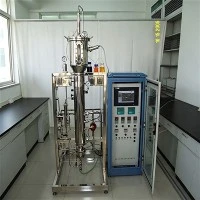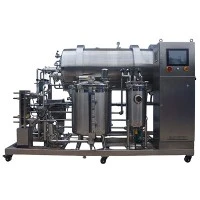

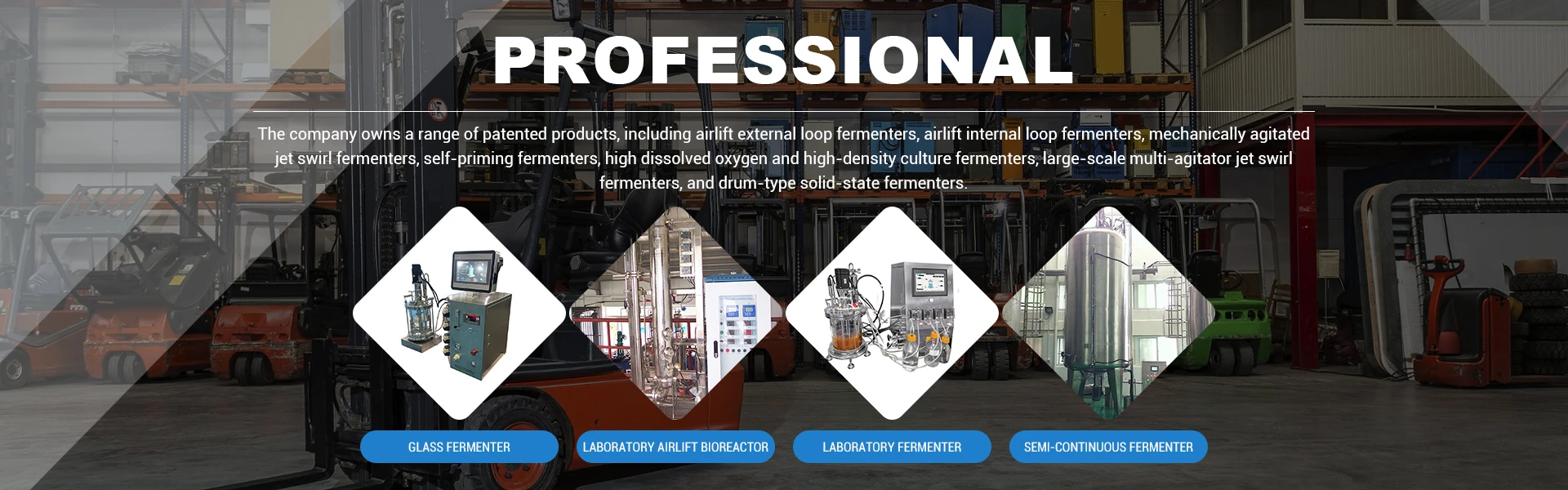
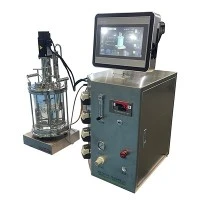
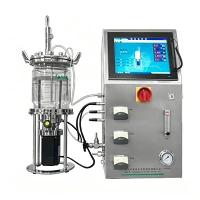
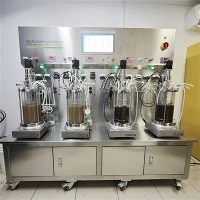
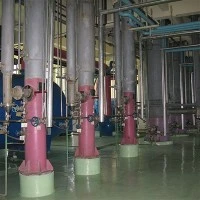


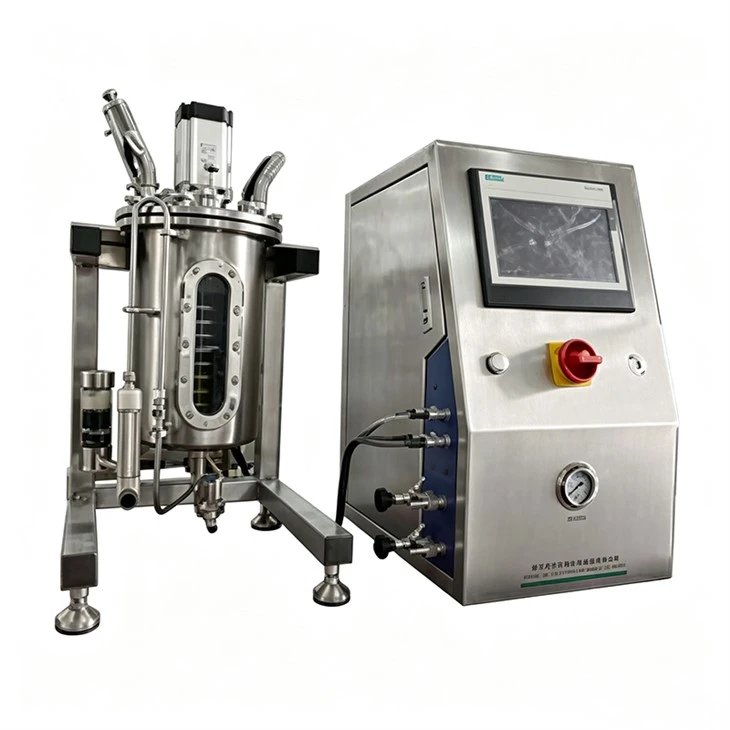
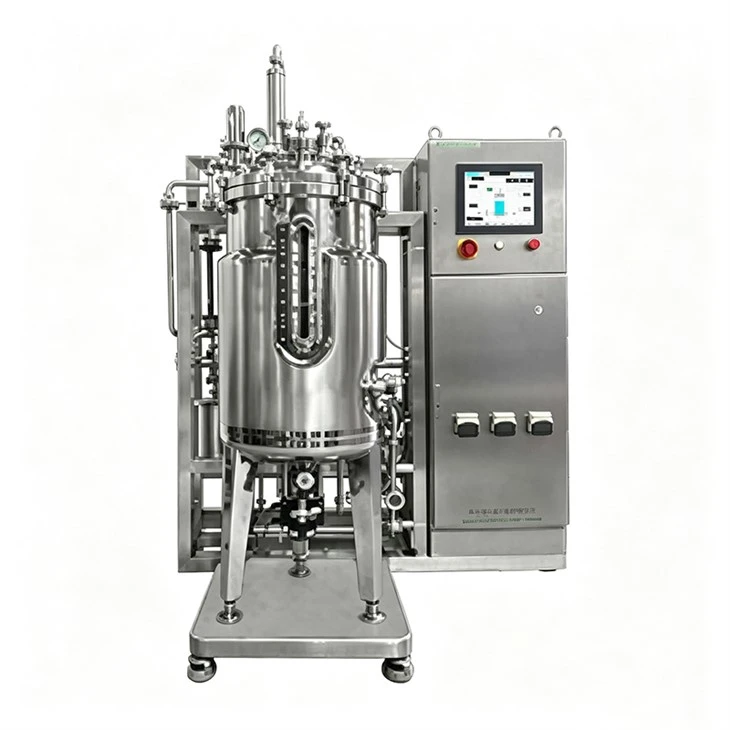
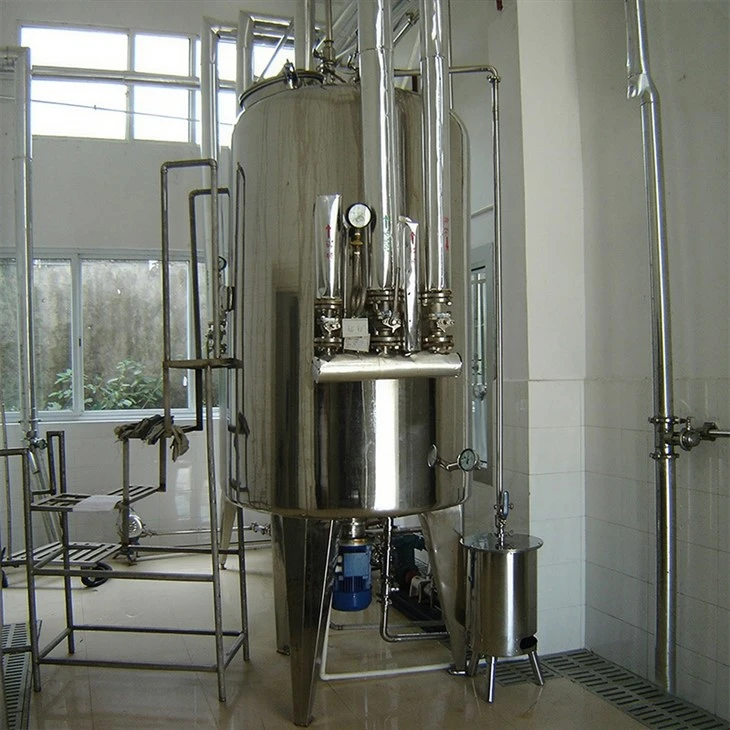
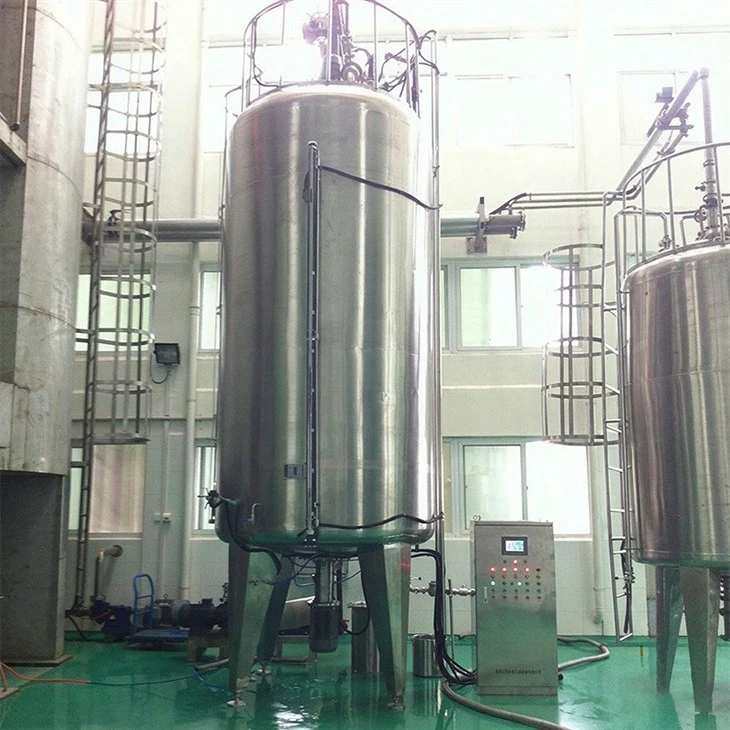
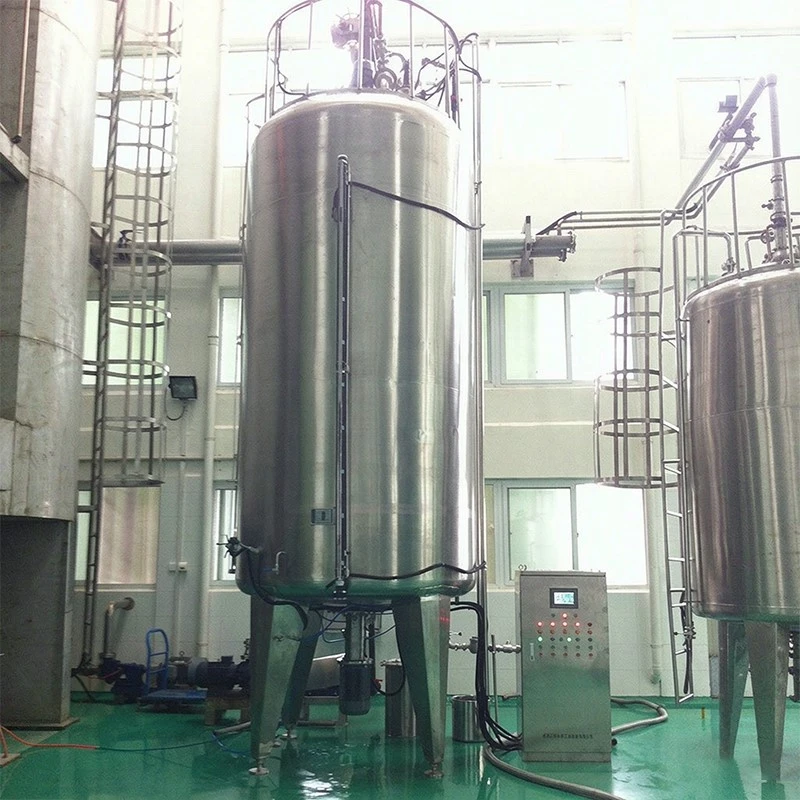
The Self-Priming Bioreactor is an aerobic fermentation device that operates without an external air compressor. It relies on a high-speed rotating impeller to create negative pressure that automatically draws in sterile air, simultaneously achieving gas-liquid mixing and oxygen mass transfer. This design significantly reduces energy consumption, floor space requirements, and equipment investment, making it a highly efficient solution for aerobic bioprocesses.
Core Structure and Self-Priming Agitation System
The reactor features a pressure-resistant sealed vessel with jacket or coil heat exchange, foam breaker, and ports for material addition and sampling. The core component is the self-priming agitation system – a hollow shaft with a hollow rotor and stator. An air inlet above the liquid level on the hollow shaft connects to a sterile filter. The shaft seal and sterile system prevent leakage and contamination. Temperature control, pH/DO sensors, and inlet/outlet sterile filters complete the system.
Working Principle
Before startup, the impeller is submerged in liquid. When rotation begins, centrifugal force creates a localized negative pressure at the impeller center. External sterile air is drawn through the hollow shaft and sheared into fine bubbles at the impeller edge. The bubbles are uniformly dispersed through the stator and tank turbulence, significantly increasing gas-liquid contact area and oxygen transfer efficiency. Exhaust gas passes through the top foam breaker and sterile filter before discharge.
Key Advantages
The self-priming design eliminates the need for air compressors and complex compressed air systems, reducing energy consumption and floor space. The sterile air path is shorter, reducing contamination points. Oxygen utilization efficiency can reach 70%–80%, significantly higher than conventional sparged systems. Equipment investment and maintenance costs are substantially lower than compressor-dependent systems.
Limitations
The negative pressure generated is limited, making this design less suitable for high-viscosity or extremely high-oxygen-demand applications. High rotational speeds may damage shear-sensitive cells or mycelia. The impeller must remain submerged during startup, and the operating parameter adjustment range is relatively narrow.
Typical Applications
The self-priming bioreactor is widely used in the food industry for acetic acid fermentation and yeast cultivation. In pharmaceutical and biochemical industries, it serves for antibiotic, enzyme, and organic acid production. Environmental applications include high-concentration organic wastewater treatment. It is suitable for laboratory-scale, pilot-scale, and small-to-medium-scale aerobic fermentation.
Manufacturing Expertise and Support
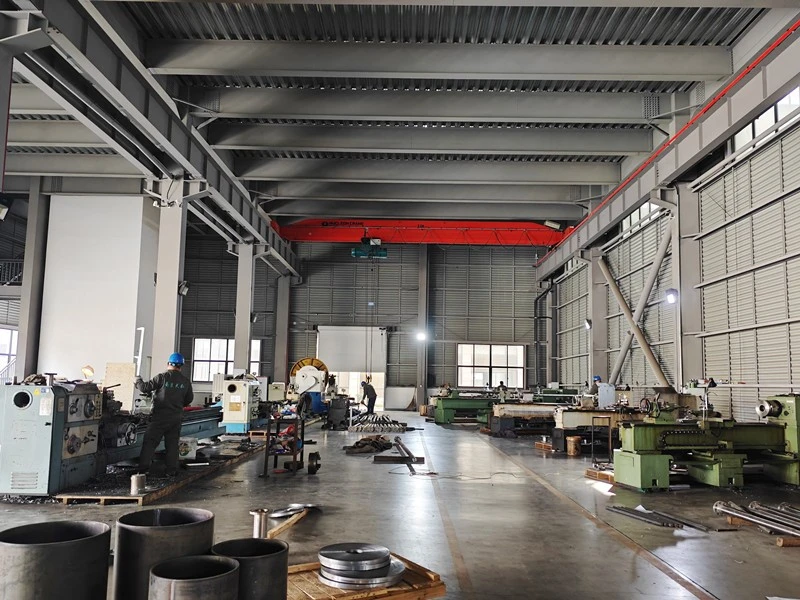
NanJing TianHong Bioengineering Equipment Co., Ltd. holds multiple patents for self-priming fermenters and has designed and manufactured units up to 200 m³ for yeast and acetic acid production. The company's technical team has over 30 years of experience and holds ISO9001 certification, special equipment production licenses, and more than 30 fermentation-related patents. With over 500 fermentation projects completed, the company provides comprehensive support from process design to installation and commissioning.
Product Specifications
|
Parameter |
Description |
|
Volume Range |
5L to 150 m³ |
|
Vessel Material |
316L stainless steel |
|
Agitation Type |
Self-priming hollow shaft + hollow rotor/stator |
|
Oxygen Utilization |
70%–80% |
|
Sterilization |
In-situ steam sterilization (SIP) |
|
Control System |
PLC with touchscreen automation |
|
Typical Applications |
Acetic acid fermentation, yeast cultivation, enzyme production, wastewater treatment |
Hot Tags: self-priming fermenter, China self-priming fermenter manufacturers, suppliers, factory