

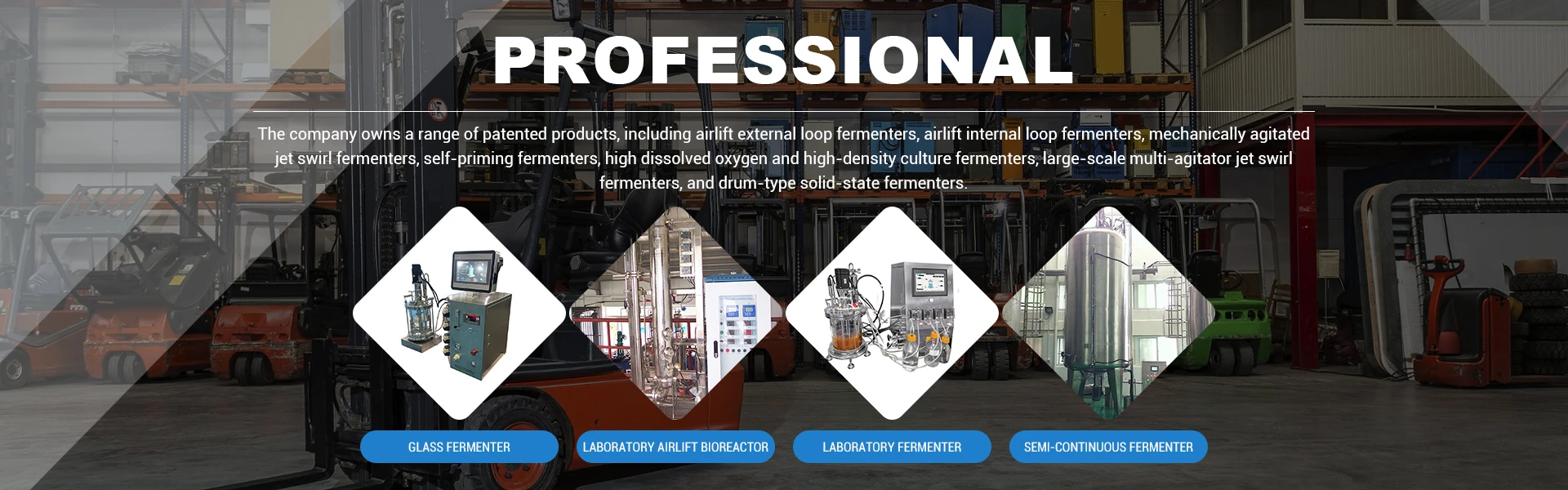
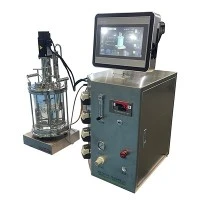
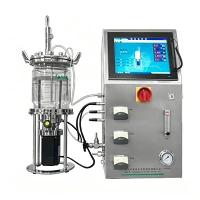
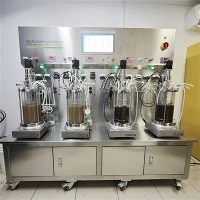
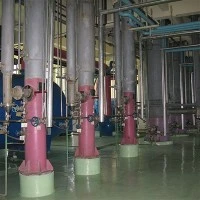
As biotechnology, fermentation engineering, and modern biomanufacturing continue to advance, pilot-scale fermenters are playing an increasingly important role in the transition from laboratory research to industrial production. As a critical link between bench-scale development and commercial manufacturing, these systems provide controlled cultivation environments while integrating process monitoring, automated regulation, feeding, and data collection capabilities to support process validation and scale-up studies.
Precise process control is one of the core functions of a pilot-scale fermenter. During operation, critical parameters such as temperature, pH, dissolved oxygen, agitation speed, and aeration can be continuously monitored and adjusted. Heating, cooling, gas supply, agitation, and pH regulation systems work together to maintain suitable cultivation conditions and support consistent microbial or cell growth.
Efficient agitation and aeration are essential for maintaining effective mixing and gas–liquid mass transfer. As fermentation volume increases, maintaining uniform mixing and adequate oxygen availability can become more challenging. A well-designed pilot fermenter combines an appropriate agitation system with controlled aeration to promote the distribution of nutrients, temperature, and dissolved oxygen throughout the culture while meeting the oxygen requirements of different biological processes.
Nutrient feeding and foam control provide additional support for more demanding fermentation processes. During fed-batch operation, nutrients or other process materials can be added according to a predefined strategy to support continued cultivation. When excessive foam develops, an integrated foam-control system can respond accordingly, helping minimize its impact on normal operation and online monitoring.
Pilot-scale fermenters also provide online monitoring and automated control. Sensors continuously collect information on parameters such as temperature, pH, and dissolved oxygen and transmit the data to the control system. Researchers can use these measurements to evaluate the condition of the fermentation process and make timely adjustments. Comprehensive data records also make it easier to compare different batches and provide useful information for subsequent scale-up studies.
One of the most important functions of a pilot-scale fermenter is process validation and scale-up evaluation. Pilot operation allows researchers to investigate how mixing, heat transfer, mass transfer, and oxygen delivery change as the process moves to a larger volume. It also provides an opportunity to determine whether process parameters established at laboratory scale remain practical under larger operating conditions. The resulting data can support industrial equipment design, production parameter development, and further process optimization.
With continued advances in automation, digitalization, and intelligent control, pilot-scale fermenters are becoming increasingly integrated and sophisticated. Their role is expected to expand across microbial fermentation, food biotechnology, biopharmaceutical development, and modern biomanufacturing, providing a reliable and efficient platform for translating laboratory discoveries into scalable production processes.