

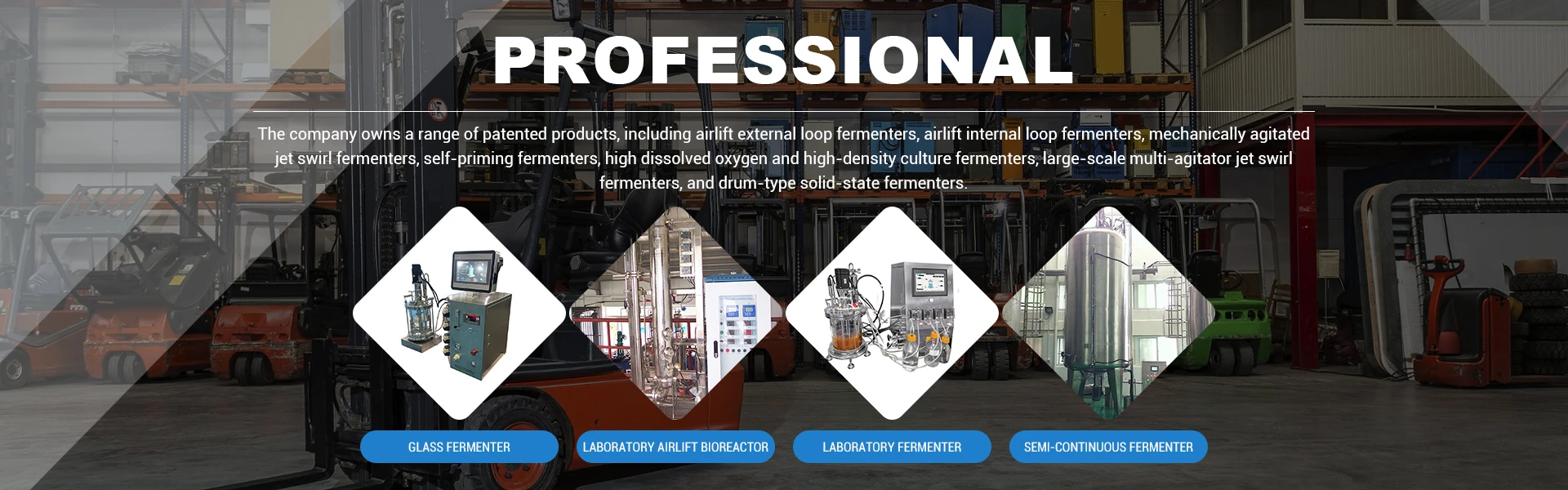




As biotechnology, fermentation engineering, and modern biomanufacturing continue to advance, laboratory bioreactors are playing an increasingly important role in research, process development, and culture optimization. These systems provide controlled conditions for microorganisms, cells, and other biological systems while enabling researchers to monitor critical process parameters and generate valuable data for further process improvement and scale-up.
One of the primary functions of a laboratory bioreactor is to create a controlled cultivation environment. The growth and metabolism of microorganisms or cells can be affected by temperature, pH, dissolved oxygen, agitation, and nutrient availability. Through integrated temperature control, agitation, aeration, and feeding systems, researchers can adjust these conditions according to the requirements of a specific biological process and maintain a stable environment throughout cultivation.
Monitoring and controlling process parameters is another essential function. Sensors continuously measure conditions such as temperature, pH, and dissolved oxygen and transmit the information to the control system. When a parameter moves outside its target range, the system can respond by adjusting agitation speed, gas flow, heating, or cooling. Coordinated control of multiple parameters allows researchers to study the effects of individual process conditions more accurately.
Laboratory bioreactors are also valuable for strain screening and culture optimization. Compared with conventional shake-flask experiments, they provide a more controlled environment that can better represent key conditions encountered during larger-scale cultivation. Researchers can evaluate different combinations of temperature, pH, aeration, agitation, and feeding strategies to identify suitable operating conditions and establish a stronger foundation for further process development.
Another important role is supporting process scale-up studies. Data generated at laboratory scale can help researchers identify critical process parameters and understand factors such as mixing, oxygen transfer, heat management, and nutrient distribution. Addressing these issues at an early stage can reduce technical uncertainties when moving from laboratory development to pilot-scale and industrial production.
Laboratory bioreactors are used in a wide range of fields, including food fermentation, biopharmaceutical development, agricultural biotechnology, and modern biomanufacturing. With advances in automation, online sensing, and digital process management, their capabilities are continuing to expand. Laboratory bioreactors are evolving beyond basic cultivation equipment into integrated platforms that connect bioprocess development, data analysis, process optimization, and industrial implementation.