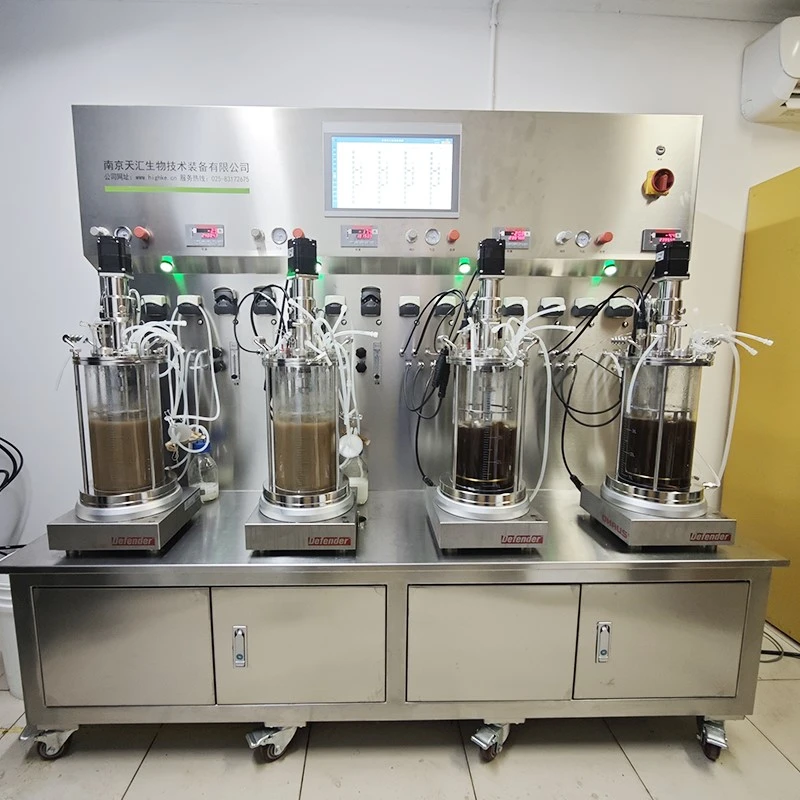





As biomanufacturing, food fermentation, biopharmaceutical production, and agricultural biotechnology continue to develop, industrial-scale fermenters are being used increasingly widely for large-volume biological production. Because these systems involve large vessels and multiple interconnected components, operators must manage parameters such as temperature, pH, dissolved oxygen, pressure, agitation, aeration, and nutrient feeding. Establishing clear operating procedures and monitoring equipment performance throughout the process can help improve production stability and equipment reliability.
Before an industrial fermenter is put into operation, the equipment should be thoroughly inspected and prepared. The vessel, agitation system, piping, valves, sensors, and control system should be checked to ensure that they are functioning properly. Appropriate cleaning and sterilization procedures should also be completed according to the process requirements. For processes that require aseptic conditions, particular attention should be paid to piping connections and interfaces to minimize the risk of contamination.
Culture media and raw-material management is another important consideration. Materials should be prepared according to the process specification, with appropriate attention to quality, storage conditions, and the order of addition. Because different materials can affect the culture environment in different ways, addition procedures should be carefully controlled to minimize unnecessary process fluctuations.
During fermentation, operators should closely monitor temperature, pH, dissolved oxygen, agitation, and aeration. These parameters can change continuously as microorganisms or cells grow and metabolize. Online sensors provide ongoing process information, allowing adjustments to be made when conditions begin to move outside the desired range. Because process variables can influence one another, changes to one parameter should be evaluated in the context of the overall process rather than in isolation.
Pressure control and equipment safety also require particular attention. Industrial fermenters involve gas supply, exhaust, mechanical agitation, and other operating activities, so pressure-control systems, exhaust pathways, and safety devices must remain in proper working condition. Piping, valves, and other critical components should not be removed or modified while the equipment is operating. Maintenance should only be performed under appropriate safety conditions.
Foam management and nutrient feeding can also have a significant effect on fermentation performance. Excessive foam may interfere with aeration and online sensors, making appropriate foam-control measures necessary when required by the process. For fed-batch operations, feeding rates and quantities should follow the established process strategy to avoid undesirable changes in culture conditions.
After production is completed, cleaning, inspection, and maintenance should be carried out promptly. Equipment should be cleaned according to the applicable process and maintenance requirements, while critical components such as impellers, seals, sensors, and piping should be inspected for potential issues. Maintaining accurate records of operating conditions and equipment status can also provide valuable information for subsequent batches, troubleshooting, and process optimization.
Overall, reliable operation of an industrial-scale fermenter depends on effective coordination between equipment, process requirements, and operating personnel. Thorough equipment preparation, continuous process monitoring, appropriate safety management, and routine maintenance can help reduce operational risks and improve process stability, providing dependable equipment support for large-scale biomanufacturing.