

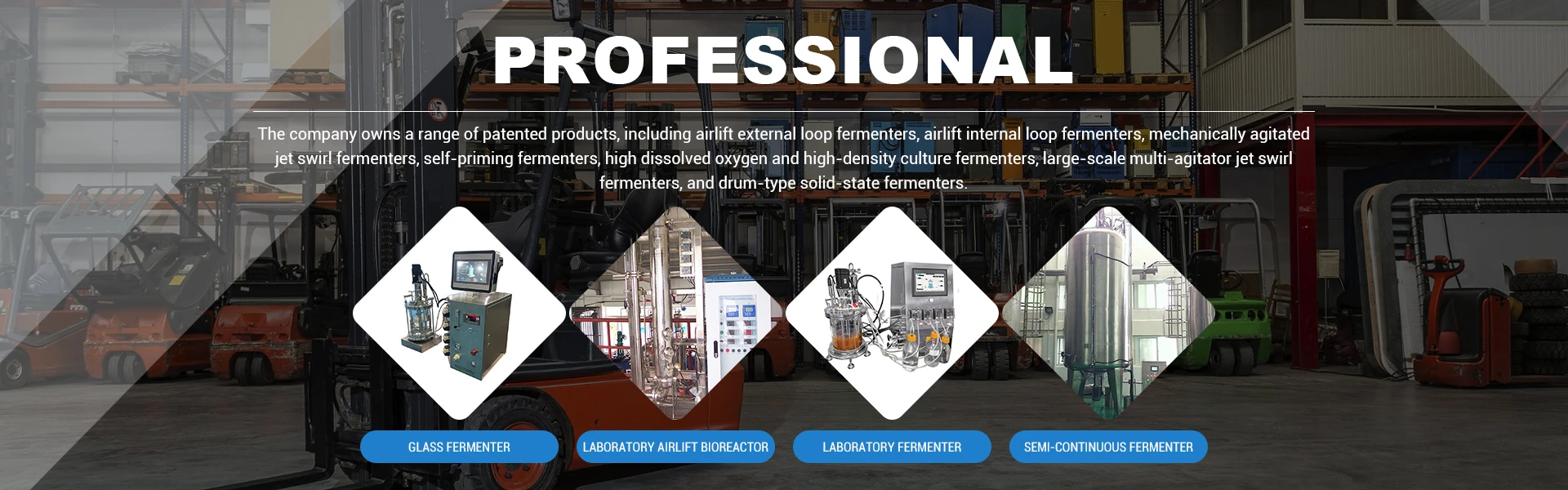




As biotechnology, fermentation engineering, and modern biomanufacturing continue to expand, laboratory bioreactors have become valuable platforms for bioprocess research and development. Compared with conventional cultivation methods, they provide a more controlled environment and enable continuous monitoring of critical process conditions. These capabilities support strain screening, culture optimization, and the development of more reliable bioprocesses.
Precise process control is one of the main advantages of laboratory bioreactors. During cultivation, key parameters such as temperature, pH, dissolved oxygen, agitation speed, and aeration can be monitored continuously and adjusted according to predefined conditions. Maintaining stable operating parameters allows researchers to better evaluate how individual process conditions influence microbial or cellular growth and productivity.
Efficient mixing and mass transfer are also important benefits. A properly designed agitation system promotes uniform distribution of nutrients, temperature, and dissolved oxygen throughout the culture. At the same time, the aeration system supplies the required process gases and works with the agitation system to improve gas–liquid mass transfer. This is particularly important for aerobic cultivation processes that depend on a consistent oxygen supply.
Flexibility is another major advantage. Laboratory bioreactors are available in different working volumes and can be configured with various agitation systems, sensors, and control modules. Additional functions, including controlled feeding and foam management, can be integrated when required. This adaptability makes the equipment suitable for microbial fermentation, mammalian cell culture, food fermentation, and a wide range of other bioprocess studies.
Laboratory bioreactors also provide comprehensive process monitoring and data traceability. Important cultivation parameters can be recorded throughout the experiment, giving researchers a detailed dataset for process analysis. For studies involving repeated experiments or comparisons between different operating conditions, systematic data collection can improve reproducibility and provide useful information for subsequent process development.
Another important benefit is their role in supporting process scale-up. Laboratory studies allow researchers to investigate critical process parameters before moving to pilot or industrial production. Identifying potential process challenges at an early stage can help reduce development risks and provide a stronger technical foundation for larger-scale manufacturing.
As automation, online monitoring, and digital technologies continue to advance, laboratory bioreactors are becoming increasingly precise and intelligent. Enhanced process control, data analysis, and system integration will further expand their capabilities, enabling these systems to provide more efficient equipment support for biotechnology research, bioprocess development, and the industrialization of modern biomanufacturing technologies.