

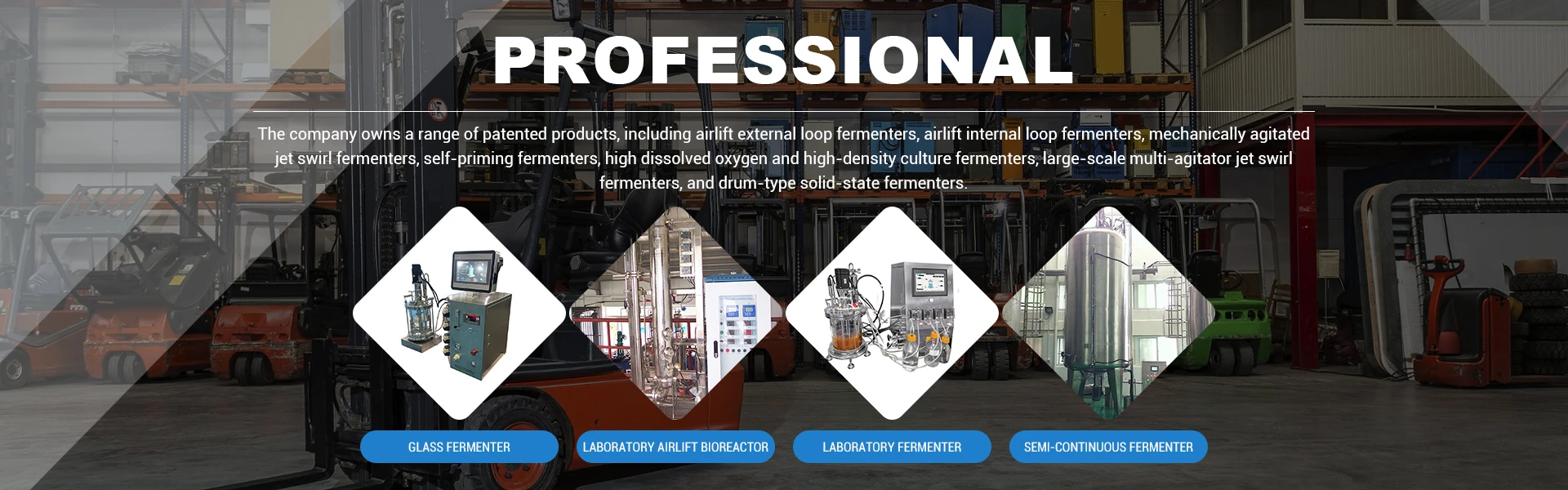




As biomanufacturing, food fermentation, biopharmaceutical production, and related industries continue to grow, industrial-scale fermenters have become essential equipment for large-scale biological production. Their manufacturing quality directly affects operational reliability, process control, and production efficiency. An industrial fermenter is far more than a large vessel for holding liquid. It is an integrated system that combines the vessel, agitation, aeration, temperature control, monitoring, and process piping, making careful engineering and manufacturing essential.
The manufacturing process generally begins with process requirements and structural design. Before fabrication, engineers determine factors such as vessel capacity, operating pressure, temperature range, agitation method, aeration requirements, and process connections based on the intended fermentation process. Once the overall design has been established, the vessel, agitation components, piping, and control systems can be planned as an integrated system to guide subsequent fabrication.
Material selection is a critical stage in the manufacturing process. Because the equipment is in prolonged contact with culture media and process fluids, the materials used for the vessel and associated components must be selected according to the process environment. Factors such as corrosion resistance, mechanical properties, cleanability, and service conditions need to be considered. Once the materials have been specified, fabrication can proceed through cutting, forming, welding, and other controlled manufacturing operations.
Welding and surface finishing have a direct impact on vessel integrity and service performance. After the vessel sections are assembled, welded joints undergo appropriate quality inspections. The internal surfaces may then be finished according to the intended application, creating a smoother and more maintainable process environment. For applications with stringent hygienic requirements, particular attention is given to connections, piping interfaces, and areas where residues could accumulate.
After vessel fabrication, the agitation, aeration, temperature control, and online monitoring systems are installed. The agitation system promotes effective circulation and mixing, while the aeration system supplies process gases. Temperature-control equipment helps maintain the desired cultivation environment, and sensors monitor variables such as temperature, pH, and dissolved oxygen. Once installation is complete, the individual systems are checked to ensure that they function properly as an integrated unit.
Testing and quality inspection represent another important stage of manufacturing. The completed fermenter is inspected according to its design and applicable technical requirements, with particular attention to the vessel, piping, valves, seals, and control system. Functional testing can then be performed to verify equipment operation and identify potential issues before delivery and commissioning.
With the continued development of automation and smart manufacturing, industrial-scale fermenter production is moving toward greater precision, modularity, and digital integration. More sophisticated design, fabrication, and quality-control practices will enable these systems to better meet the demands of modern biomanufacturing for reliable operation, precise process control, and efficient large-scale production.