

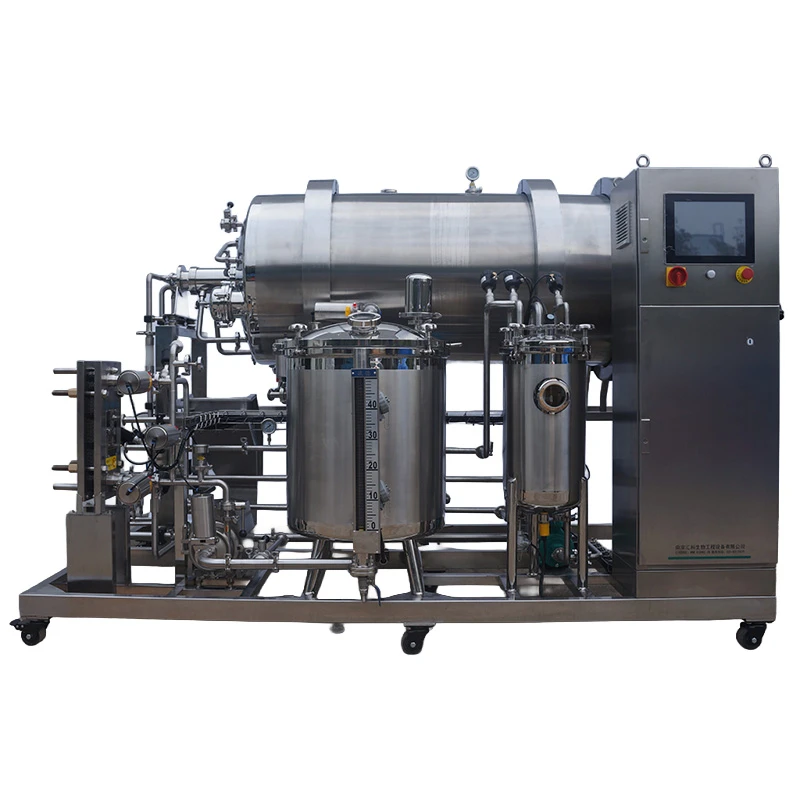
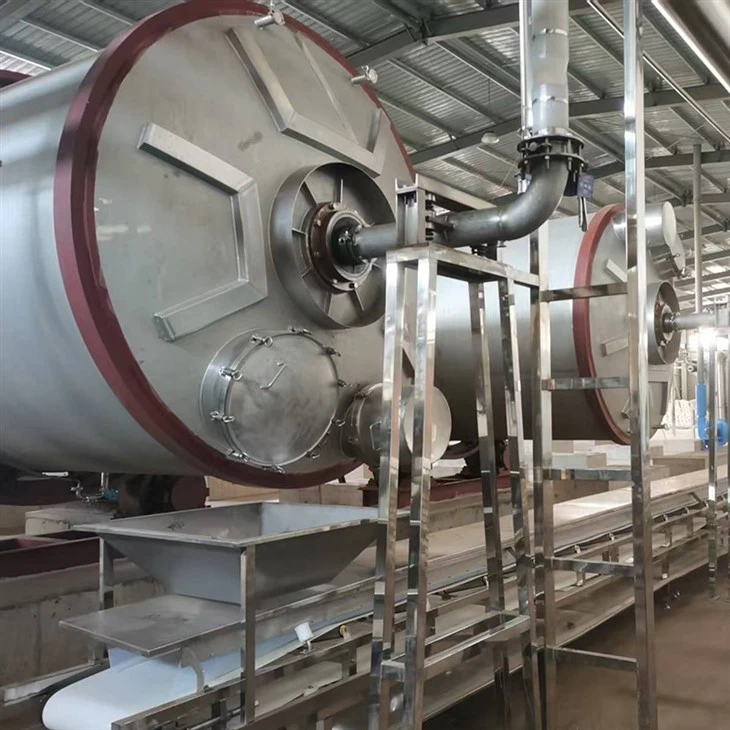
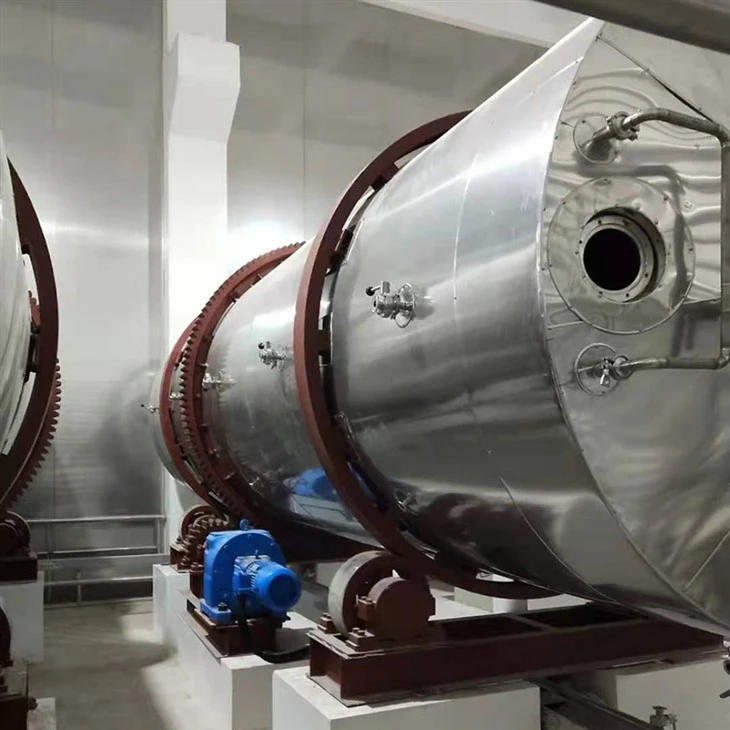
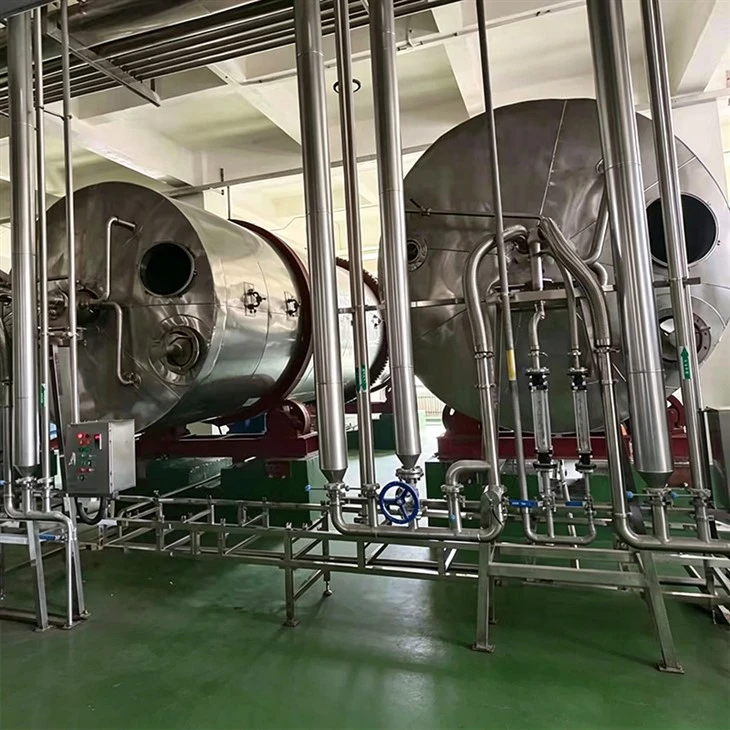
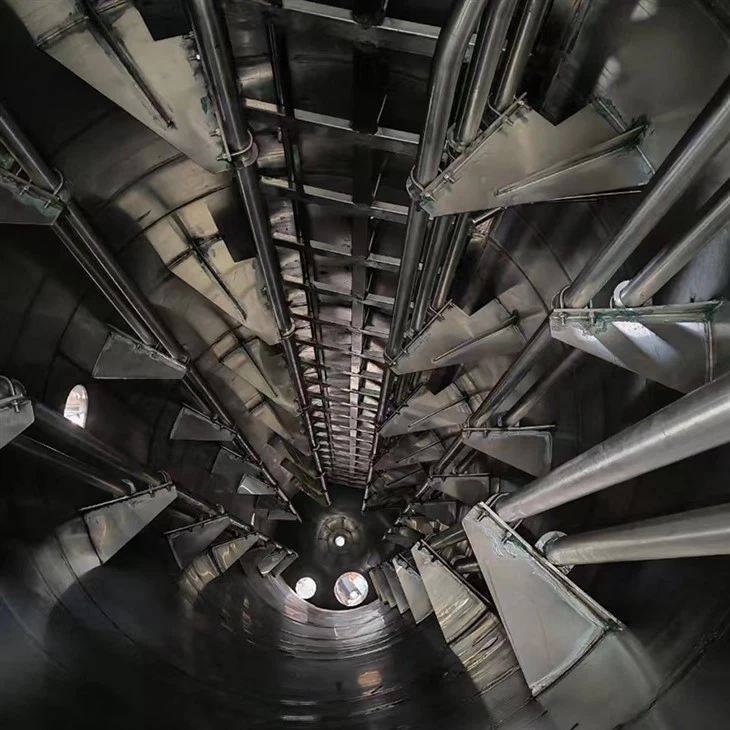
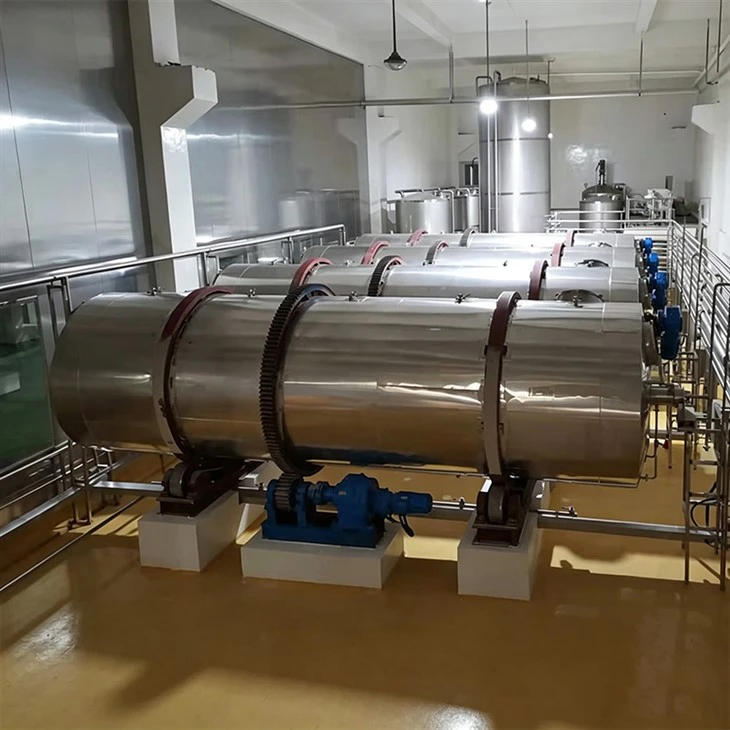
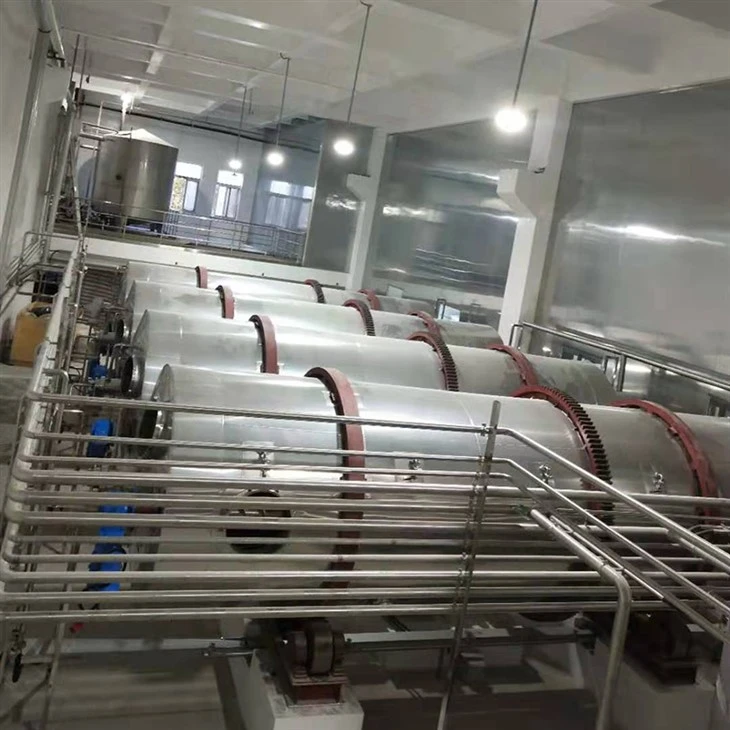
The Rotary Drum Solid-State Fermenter is a horizontal or slightly inclined rotating cylindrical vessel designed for solid-state fermentation processes. The drum provides in-situ sterilization, sterile aeration, and temperature/humidity control within a closed, sealed environment. The gentle tumbling action created by slow rotation ensures thorough mixing of solid substrates without damaging sensitive fungal mycelia or spores, making it ideal for enzyme production, biopesticide cultivation, and food fermentation applications.
Core Structure
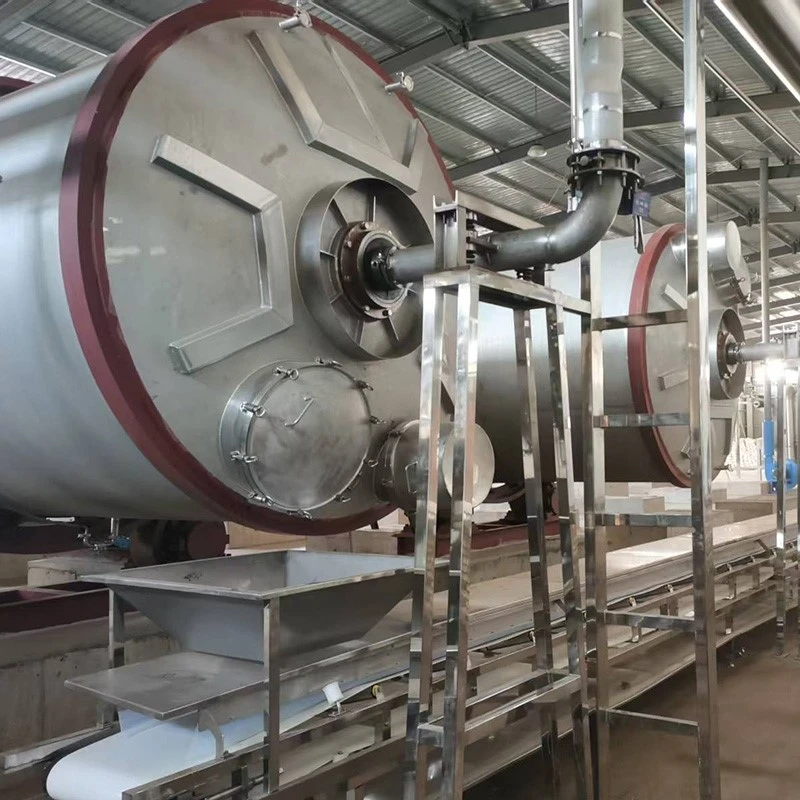
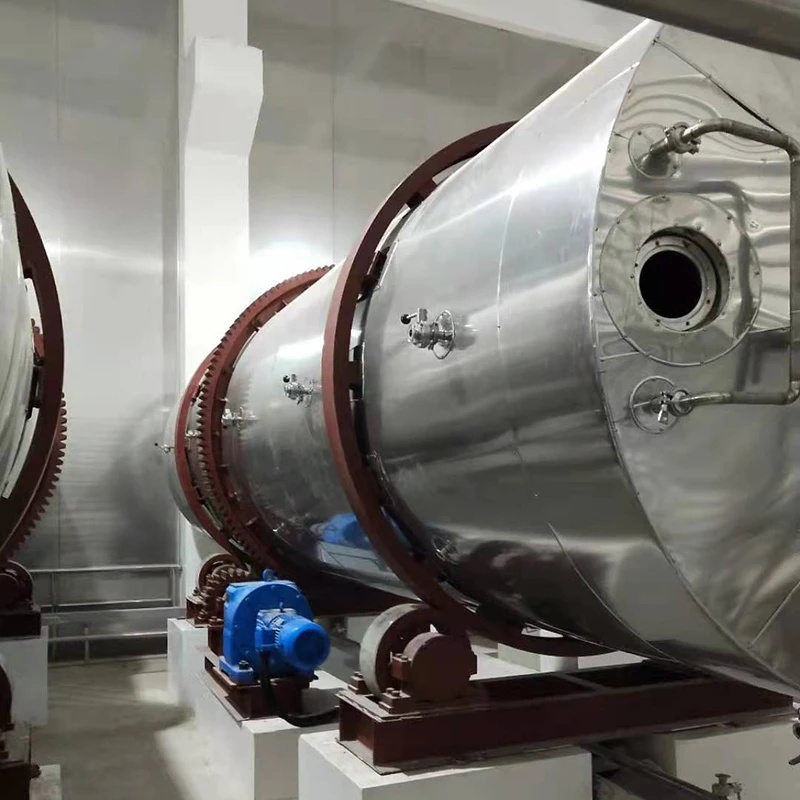
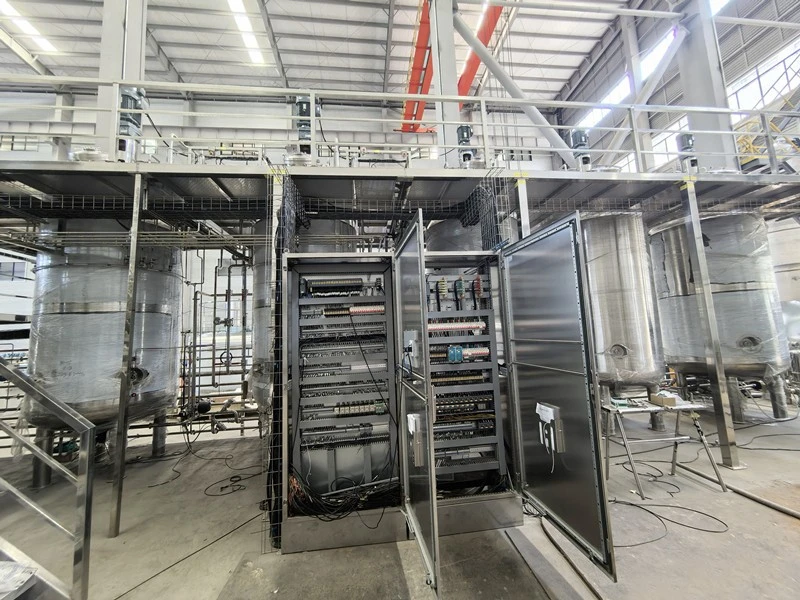
The main body is a horizontal stainless steel cylinder with automated material inlet and outlet. Jacket or heat exchange coils provide temperature control, with typical loading volume of 30%–60%. The drive system features a variable frequency motor with forward/reverse capability, operating at speeds from 0.5 to 10 rpm. Support structure includes trunnion wheels with thrust rollers or friction rings. Sterile air is introduced through a rotary valve at the end cover, with top exhaust and adjustable airflow. Humidity can be controlled via air humidification, and a spray system allows moisture supplementation or inoculation. The system includes SIP steam sterilization, PLC automatic control for speed, airflow, temperature, humidity, and sterilization cycles.
Working Principle
Solid substrate is sterilized and cooled, then loaded into the drum (or sterilized in place). Inoculum is introduced, and the drum rotates at a set low speed – either continuously or intermittently. Material is carried up the drum wall and gently falls back, creating a tumbling motion that mixes the substrate without mechanical shear damage. Sterile conditioned air is continuously introduced, providing oxygen and removing metabolic heat and CO₂. Jacket or coil maintains temperature throughout the fermentation process.
Key Advantages
The gentle mixing action produces far lower shear forces than mechanically agitated vessels, making the rotary drum fermenter particularly suitable for filamentous fungi such as Aspergillus and Beauveria that produce spores and mycelia. The design supports semi-continuous or continuous production modes, enabling industrial-scale solid-state fermentation.
Typical Applications
In enzyme production, the rotary drum solid-state fermenter is used for glucoamylase, cellulase, and phytase. In food and condiment production, it serves for vinegar, soy sauce koji, and early-stage fermented bean curd. In biopesticide production, it enables large-scale spore production of Beauveria bassiana and Metarhizium anisopliae. In bioconversion, it is used for straw degradation, active ingredient transformation in medicinal plants, and bioethanol production.
Manufacturing Expertise and Support
NanJing TianHong Bioengineering Equipment Co., Ltd. holds patents for rotary drum solid-state fermenters and related equipment. The company's technical team has over 30 years of experience in equipment development and industrial production, holding ISO9001 certification and special equipment production licenses. With over 500 fermentation projects completed and 3,000+ bioreactors supplied, the company provides comprehensive engineering support from laboratory to industrial scale.
Product Specifications
|
Parameter |
Description |
|
Vessel Type |
Horizontal or slightly inclined rotating cylinder |
|
Drive Speed |
0.5–10 rpm (variable frequency, forward/reverse) |
|
Loading Volume |
30%–60% of total volume |
|
Material |
Stainless steel (food/pharma grade) |
|
Sterilization |
In-situ steam sterilization (SIP) |
|
Aeration |
Sterile conditioned air with humidity control |
|
Temperature Control |
Jacket or heat exchange coils |
|
Control System |
PLC automatic control for speed, airflow, temperature, humidity, sterilization |
|
Typical Applications |
Enzyme production, biopesticide cultivation, food fermentation, bioconversion |
Hot Tags: rotary drum solid-state fermenter, China rotary drum solid-state fermenter manufacturers, suppliers, factory