
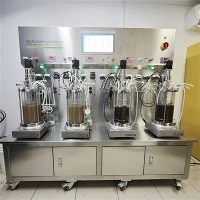

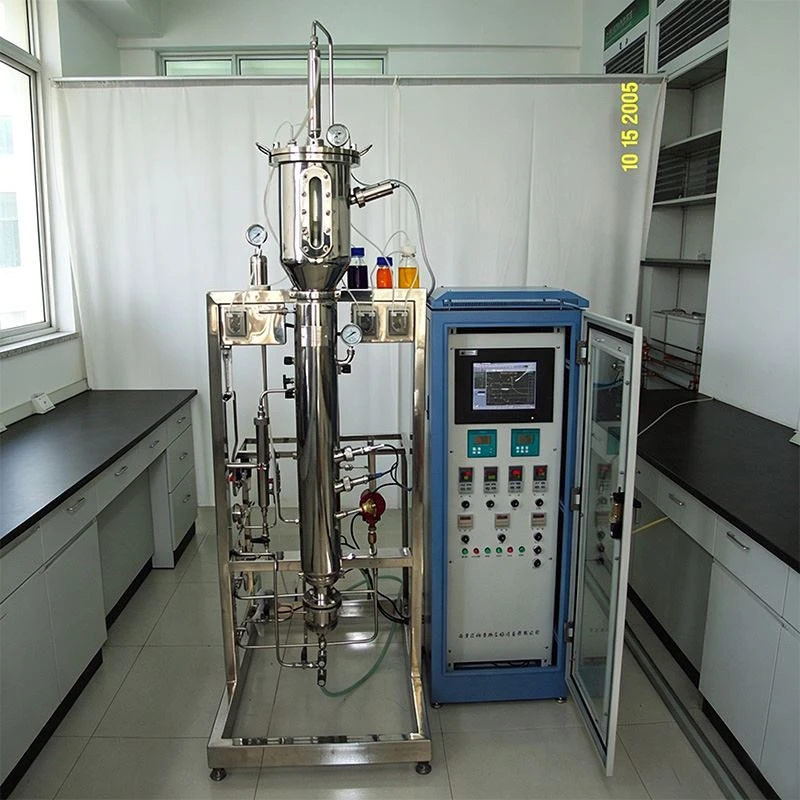


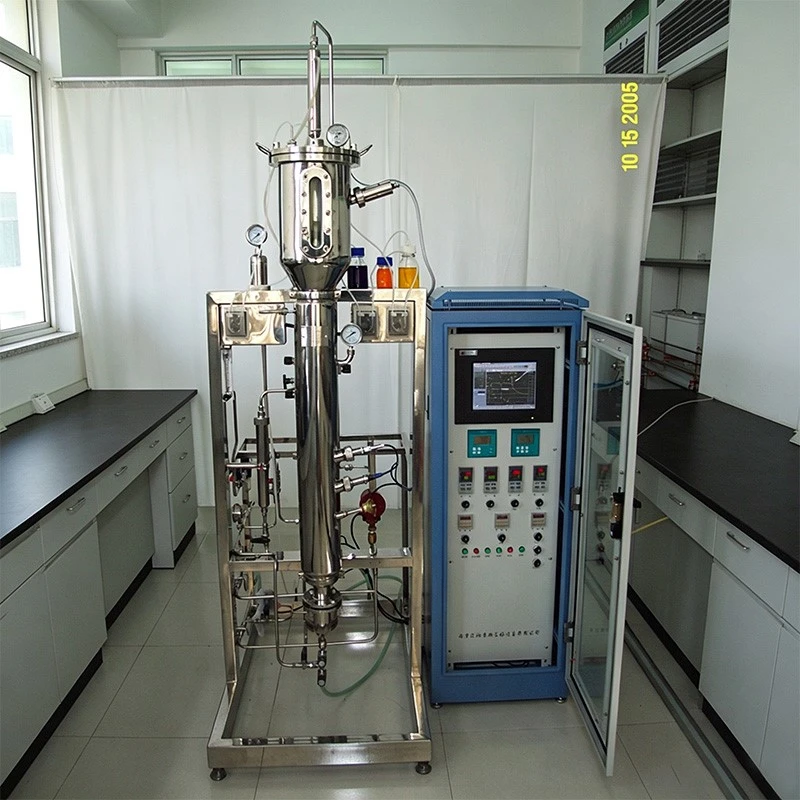
The Internal Circulation Airlift Fermenter is a high-efficiency bioreactor that operates without mechanical impellers, relying on gas-driven internal circulation for mixing and mass transfer. A concentric draft tube divides the vessel into riser and downcomer zones, with gas introduced at the bottom of the draft tube driving liquid circulation. This design offers low shear stress, reduced energy consumption, and excellent sterility, making it particularly suitable for shear-sensitive cultures and high-value biopharmaceutical applications.
Core Structure
The vessel features a vertical cylindrical design with a height-to-diameter ratio typically between 5:1 and 9:1. Jacket or coil provides temperature control. A gas-liquid separation zone is located at the top with exhaust outlet, and the bottom features conical or rounded geometry for efficient discharge and gas distribution. The concentric draft tube – the core component – is installed coaxially inside the vessel, dividing the internal space into riser and downcomer zones. The draft tube height is approximately 70%–90% of the reaction section height. The gas sparger, using a jet ejector, ring sparger, or microporous disc, is positioned at the bottom of the draft tube.
Working Principle
Sterile air is injected at high velocity through the sparger into the bottom of the draft tube. The gas-liquid mixture inside the tube has high gas holdup and significantly lower density than the liquid outside the tube. Driven by density difference and gas flow kinetic energy, the mixture rises rapidly through the draft tube. At the top gas-liquid separation zone, part of the gas is released and degassed liquid flows from the draft tube upper rim into the annular downcomer zone, returning to the bottom by gravity to re-enter the circulation loop. This continuous internal circulation achieves efficient mixing and oxygen mass transfer without mechanical agitation.
Key Advantages
The absence of impellers results in very low shear stress, making this fermenter ideal for animal cells, plant cells, and filamentous fungi. Energy consumption is typically 30%–50% lower than mechanically agitated vessels. The simple construction with minimal sealing points reduces contamination risk. CIP/SIP operations are more straightforward with fewer dead zones.
Limitations
Mixing and mass transfer efficiency decrease in high-viscosity systems. The height-to-diameter ratio requirements may limit applicability in some facility configurations.
Typical Applications
In biopharmaceutical production, the internal circulation airlift fermenter is used for animal cell culture (antibodies, vaccines) and plant cell culture (secondary metabolites). In food and enzyme production, it serves for vitamin C, yeast, single-cell protein, and enzyme fermentation. Environmental and energy applications include aerobic treatment of high-concentration organic wastewater and algae cultivation for biodiesel production.
Manufacturing Expertise and Support
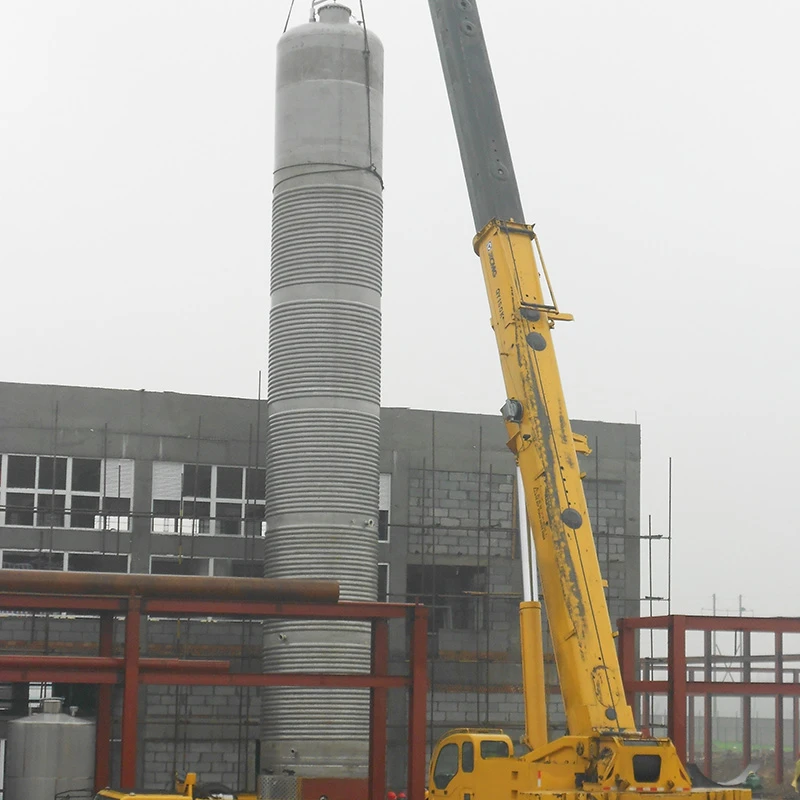
NanJing TianHong Bioengineering Equipment Co., Ltd. holds patents for internal circulation airlift fermenters and has designed and manufactured units up to 500 m³ for vitamin C production. The company holds ISO9001 certification and special equipment production licenses, with more than 30 patents related to fermenters and bioreactors. Over 500 fermentation projects completed across antibiotics, amino acids, organic acids, enzymes, and other fields demonstrate the company's extensive application expertise.

Product Specifications
|
Parameter |
Description |
|
Vessel Type |
Vertical cylinder with concentric draft tube |
|
Height/Diameter Ratio |
5:1 to 9:1 |
|
Draft Tube Height |
70%–90% of reaction section height |
|
Gas Sparger |
Jet ejector / ring sparger / microporous disc |
|
Agitation |
Gas-lift driven internal circulation (no mechanical impeller) |
|
Shear Level |
Low – suitable for shear-sensitive cells |
|
Energy Consumption |
30%–50% lower than mechanically agitated vessels |
|
Sterilization |
In-situ steam sterilization (SIP) |
Hot Tags: airlift internal circulation bioreactor, China airlift internal circulation bioreactor manufacturers, suppliers, factory